
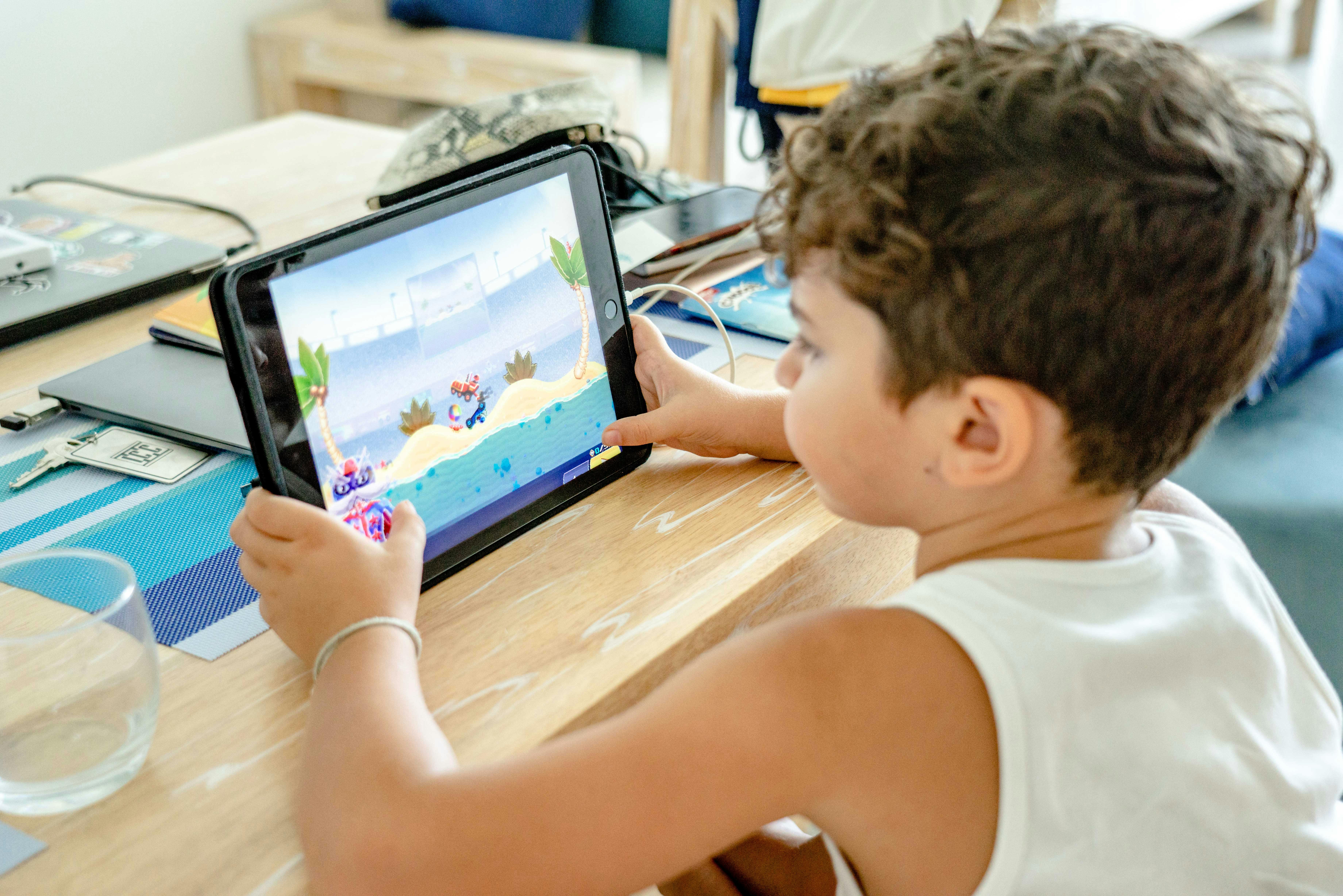
It’s 3 PM. The pool toys are scattered across the yard, the art project has morphed into a glitter bomb, and the inevitable chorus of “I’m bored!” has just begun. You’re exhausted, and the path of least resistance—handing over a tablet—is incredibly tempting.
But you also know that familiar pang of guilt. You want this summer to be about more than just screen time. You want memories, not Minecraft. You want connection, not constant scrolling.
The goal isn’t a screen-free summer (that’s unrealistic!), but a screen-smart one. Here are three creative, evidence-based approaches that busy parents can actually implement.
3 Creative Solutions to the Summer Screen-Time Struggle
- The Science: According to researcher Jamie Jirout from the University of Virginia, boredom can be a “gateway to unleashing a child’s creativity, social development, and even life skills.” When kids have to figure out how to occupy themselves, their brains are forced to work, generating new ideas and connections. A 2023 study published in Frontiers in Sociology also found that boredom “can promote creative performance,” especially when children have tangible, hands-on activities to help them transition to an engaged state.
- How it Works: Sit down with your kids at the start of the week and create a physical “Boredom Bucket.” It’s a jar or a box filled with ideas on slips of paper.
- The Creative Twist:
- “Laser Challenge”: Use flashlights or mirrors to reflect light onto a wall. The goal is to be the first to “tag” a specific target with your beam.
- “Nature’s Alphabet”: Go for a walk and challenge the kids to find one object in nature that starts with each letter of the alphabet (e.g., A=Acorn, B=Berry).
- “Backwards Day”: Eat dessert first, read a book backward (from the last page), wear clothes inside out. It’s silly, spontaneous, and sparks new neural pathways.
- The Rule: When they say, “I’m bored!”, they must pull a slip from the bucket. It empowers them to solve their own problem and gives you a break.
Solution 2: The “Use It to Earn It” Tech Timer
- The Science: A 2025 study published in the World Journal of Pediatrics followed over 1,400 children and found that those who adhered to the recommendation of ≤2 hours of daily screen time had significantly lower scores for emotional and behavioral difficulties. The American Heart Association also recommends making a plan to swap sedentary screen time for physical activity, which can help limit the average 4-6 hours of daily screen time that many 8- to 12-year-olds accumulate.
- How it Works: Invest in a simple, visual kitchen timer. This is their “Tech Timer.”
- The Creative Twist:
- The Exchange Rate: For every 30 minutes of active, screen-free play outside (riding a bike, swimming, building a fort, reading a book), they “earn” X amount of minutes of screen time.
- Physical Currency: Use poker chips, popsicle sticks, or large buttons as their “screen currency.” When they earn it, they put the chips in a jar. When they want screen time, they “pay” you with their chips.
- The Power of Choice: The child gets to choose when to use their earned time. This gives them a sense of control and ownership over the process, making them less likely to fight the limit. Once the chips are gone, the screen time is done for the day.
Solution 3: The “Family Media Menu” (Not Just a Rulebook)
- The Science: The American Academy of Pediatrics recommends creating a personalized Family Media Plan. The key, according to a 2024 article in the AAP’s own journal Pediatrics, is to make the plan collaborative: involve the whole family in setting the rules so children feel a sense of agency. Parents are also encouraged to act as positive role models for healthy digital habits.
- How it Works: Gather the family for a 15-minute meeting. Pull out a big piece of paper and create a weekly “menu.”
- The Creative Twist:
- Label the Columns: “Appetizers” (10-15 min activities), “Main Courses” (30-60 min activities), and “Side Dishes” (passive entertainment for when you need a break).
- Fill the Menu Together:
- Appetizer: Listen to a 5-minute kid’s podcast while coloring.
- Main Course: Family movie night with popcorn on Friday OR a collaborative video game like Mario Kart where everyone plays together.
- Side Dish: 20 minutes of an educational app like Khan Academy Kids or Duolingo.
- The “Chef’s Special”: This is the highlight of the week—one big, planned, screen-free event. It could be a trip to a local creek, a backyard campfire, or a “restaurant night” where the kids cook dinner. This gives them something exciting to look forward to that isn’t a screen.
Which One Should You Try?
Whichever approach you choose, the real magic is in being flexible and kind to yourself (and your kids). Some days will be easier than others. The goal isn’t perfection, but a conscious shift from passive consumption to active participation in their own summer story. You’ve got this!
Sources & Further Reading
If you’d like to dive deeper into the research behind these strategies, here are the studies and articles I referenced:
- Boredom & Creativity: Jirout, J. (2020). Boredom Can Be Great for Kids. UVA Today. Link
- Boredom as a Creative Prompt: Zeißig, I. (2023). Boredom, Creativity, and the “Spark of Interest.” Frontiers in Sociology. Link
- Children’s Experience of Boredom: Begnaud, A., et al. (2020). “It’s just too much”: Exploring children’s views of boredom. Semantic Scholar. Link
- Screen Time & Behavioral Health: Iglesias-Vázquez, L., et al. (2025). Sleep Duration Moderates the Association Between Screen Time and Emotional and Behavioral Difficulties. World Journal of Pediatrics. Link
- Family Media Plan: American Academy of Pediatrics. How to Make a Family Media Use Plan.HealthyChildren.org. Link
- Family Media Plan Evidence Base: Moreno, M. A., et al. (2024). The Family Media Plan: A Collaborative Approach to Healthy Digital Habits. Pediatrics, 154(6). Link
- Screen Use & Reinforcer Pathology: Acuff, S. F., et al. (2021). Reinforcer Pathology and Internet-Related Behaviors. National Institutes of Health / PMC. Link